
FROM ETHNOCULTURE TO MODERN MEDIA: INTERNATIONAL CONFERENCE HELD AT YANKA KUPALA STATE UNIVERSITY OF GRODNO
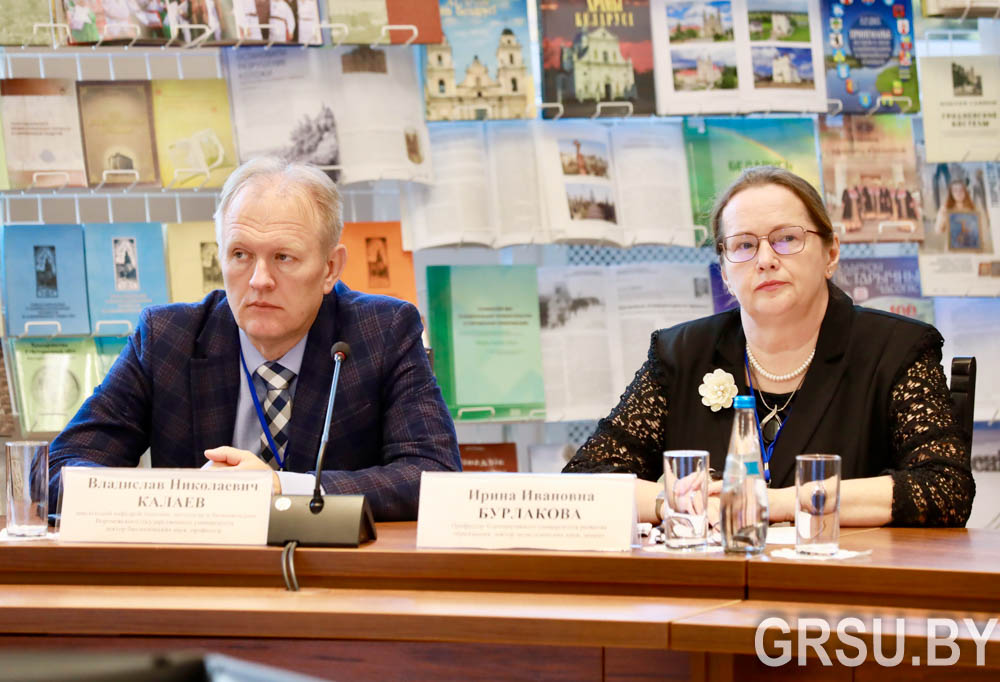
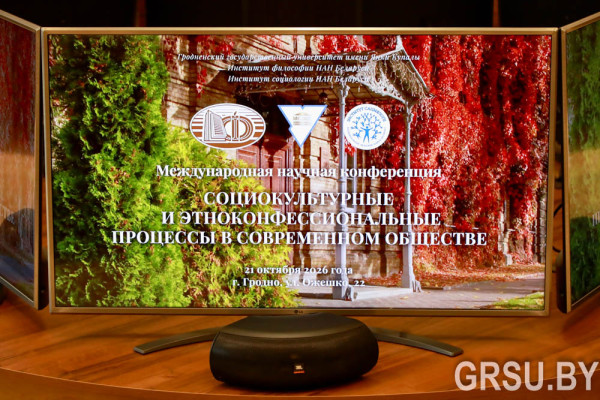
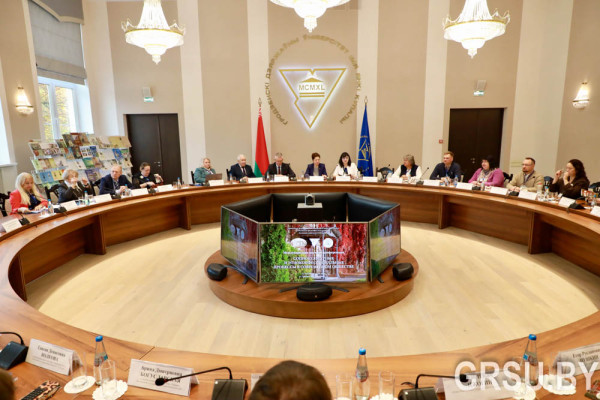
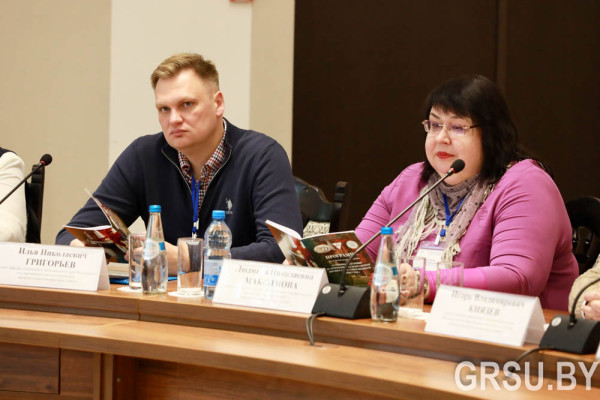
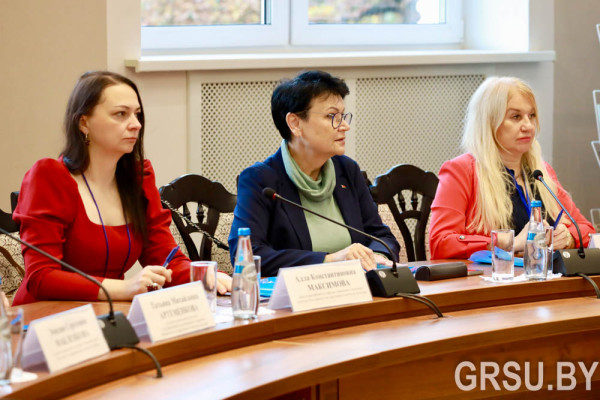
On October 21, an international academic conference "Sociocultural and Ethno-Confessional Processes in Modern Society" began at Yanka Kupala State University of Grodno. The event has brought together 131 participants from five countries, serving as a vital platform for dialogue among scholars, experts, and young people.
The forum has attracted representatives from Belarus, Russia, China, Bosnia and Herzegovina and the Pridnestrovian Moldavian Republic. Notably, students are actively participating in the discussions, more than 30 of them, including 15 from the Russian Federation.
"This conference serves as a traditional venue for discussing issues that are currently of concern to our country and the region. The focus is on sovereignty, state security, and integration-based cooperation. We are now in the digital age; whoever controls the algorithms, controls large groups of people. Our task is to understand how to harness these processes for the greater good, ensuring that digitalization helps address pressing challenges rather than becoming a threat. Furthermore, national ideological and symbolic codes are of key importance. This is a vast domain where our values, priorities, and behavioral models are established," noted Viktar Vatyl, Head of the Department of Political Science and Sociology at the Faculty of History, Communication and Tourism at Yanka Kupala State University of Grodno.
Among the conference participants is Elena Kryazheva-Kartseva, Candidate of Historical Sciences, Associate Professor, and Head of the Department of Russian History at the Faculty of Humanities and Social Sciences of the Peoples' Friendship University of Russia.
"I am very pleased to be participating in this conference at the Yanka Kupala State University of Grodno." This is an excellent platform for dialogue among scholars and the esteemed academic community, including representatives from the Institute of Philosophy and the Institute of Sociology of the National Academy of Sciences of Belarus. "My own work focuses on the marginalization of consciousness in the face of contemporary challenges", noted Elena Kryazheva-Kartseva. "We must recognize that today, wars have become cognitive in nature. They are aimed at destroying historical memory and transforming fundamental values. It is therefore crucial to discuss the mechanisms by which narratives are deployed and to collaboratively develop effective models for future engagement, including work with young people."
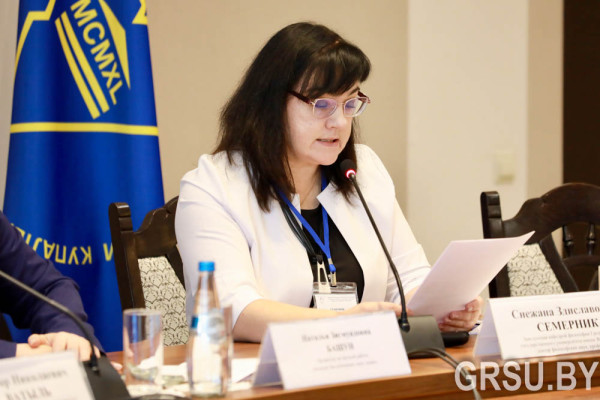
The opening ceremony was initiated by Natalia Bashun, Vice-Rector for Research at Kupala University. Welcoming the attendees on behalf of the Rector and the academic community of Yanka Kupala State University of Grodno she highlighted the significance of the forum, which successfully upholds long-standing traditions. The Vice-Rector wished everyone a productive session, lively discussions, and the opportunity to forge not only professional ties but also lasting personal friendships.
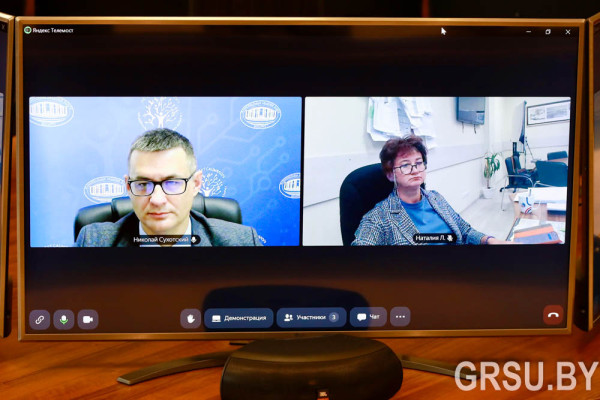
Mikalai Sukhotski, Candidate of Sociological Sciences, Associate Professor, and Deputy Director for Research and Innovation at the Institute of Sociology of the National Academy of Sciences of Belarus, spoke about the unique mission of the modern researcher:
"The mission of a researcher in our century lies not in merely recording metrics, but in providing high-quality forecasting of long-term trends and equipping government authorities with the robust analytical foundations they so urgently need today".
Additionally, a welcoming address from the administration of the Institute of Philosophy of the National Academy of Sciences of Belarus was read during the opening ceremony.
Following the official welcome, the participants proceeded to the presentation of papers. The conference program spans the entire day. In various breakout sessions, scholars will explore topics such as national and confessional processes, the development of the tourism industry, the phenomenon of temporal orientations, and the historical consciousness of society within the media landscape. Special attention will be devoted to issues of sovereignty, state security, and integration cooperation. In addition, the conference will feature an academic forum titled "Anthropological Challenges of Postmodernity".
The organizers are confident that the conference will once again serve as a prominent platform for discussing both high-level scholarly topics and issues of pressing concern to our country, the region and our university.